App development · Architecture & AI integration
denk.pause
A digital companion for teachers, with curated impulses and a knowledge-backed AI assistant.
I continue to develop denk.pause as an external developer and advise on its architecture, application structure and development approach. My work spans data integration, AI integration and release workflows.
Senior Product Engineer · February 2026–present · beWirken
In development · Web + iOS soft launch
Soft-launch milestone documented 24 September 2026
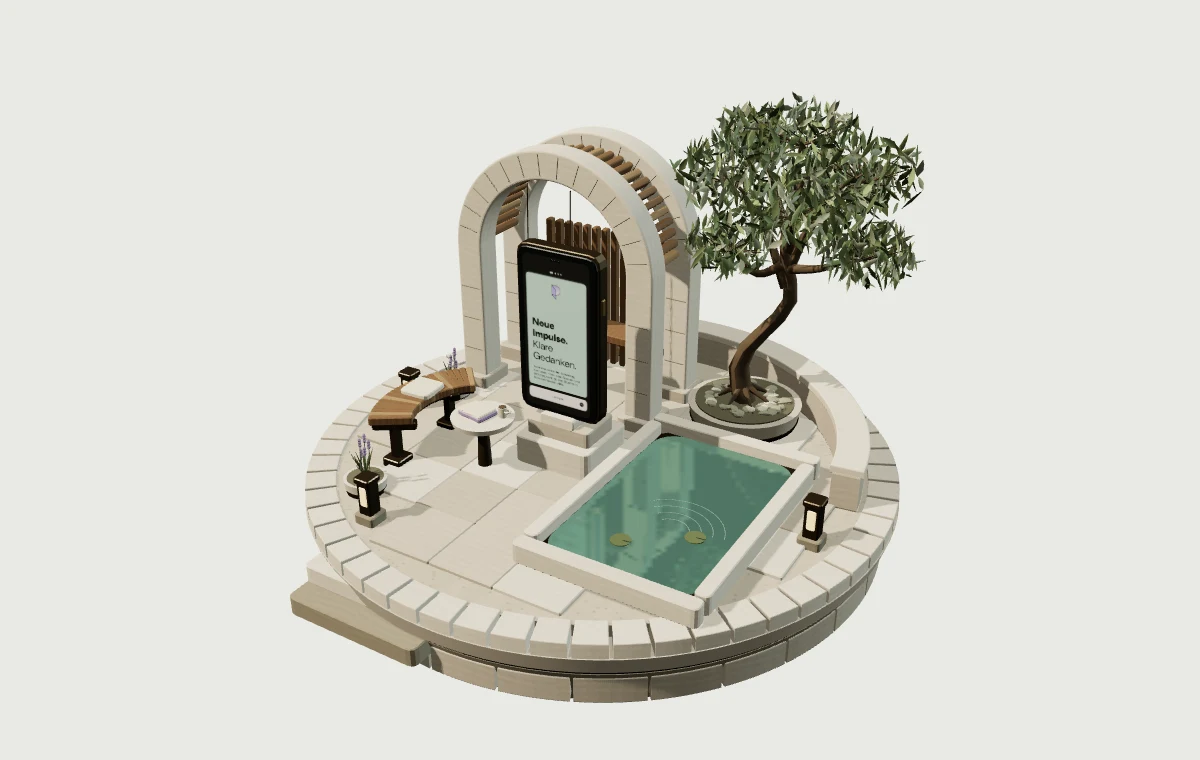
A pause in a demanding school day
Teachers need an accessible way to find a useful impulse or think through a situation. I translated that product need into a React Native/Expo application connecting reviewed editorial content, teacher context and AI conversation across web and native workflows. Clear boundaries between screens, state, storage and external services gave the product a foundation that could evolve as its requirements took shape.
Clear contracts between content, app and AI
- 01Editorial exports→
- 02Validation & import→
- 03Application data→
- 04React Native / Expo app→
- 05Lotse API & retrieval→
- 06Model provider
A versioned content pipeline connects editorial exports to application data. The app accesses the knowledge-backed assistant through a dedicated API.
Three engineering decisions
01 / Turn editorial content into application data
Content formats evolve as a product develops. I built a versioned import pipeline with schema checks, normalized taxonomy, reference and variant mapping, and publication gates. Import reports make the processing traceable, while validation catches invalid or unapproved content before publication. Format changes become explicit updates to a defined contract. The result is a working path from reviewed editorial exports into Supabase and the app, with clear control over what reaches users.
02 / Make AI context a deliberate engineering choice
Useful AI conversations depend on how instructions, retrieval, history and the answer share a token budget. I integrated streaming conversations, diagnosed provider-limit failures and bounded the client history to the last twelve messages. I also coordinated the grounding-context handoff at the app/API boundary. This makes the client’s contribution to each request predictable, balancing recent conversational context with room for retrieved knowledge and a response. It connects the visible chat experience to the constraints of the underlying service.
03 / Make release decisions verifiable
Native delivery needs more than a successful submission command. I built isolated staging, environment validation and release gates tied to reviewed code, with explicit checks for terminal build status, artifact availability and commit identity. A regression case covers a canceled build returning a successful CLI exit. At the September 2026 review, 67 local delivery-policy checks passed. These controls turn release readiness into something the workflow can verify, with distinct checks for web delivery and native builds.
A working product, with development continuing
By September 2026, denk.pause had reached soft launch with a public web app and an iOS beta. My work connected the application foundation, editorial data pipeline, streaming AI integration and delivery workflows into a working product. I continue to develop the app and consult on its technical direction, code structure and development processes.
Engineering the AI experience
My work spans the interaction users see and the service boundaries behind it: streaming responses, grounding-context handoff, bounded conversation history and token-budget diagnosis. I approach AI as part of the product system, where useful answers, responsive interactions and predictable failure handling need to work together.